RapidKnowHow Partnership
🧭 RapidKnowHow License Model
From Use → Mastery → Partnership → Ecosystem
Licenses are not to retain people.
Licenses are to give people the right to act responsibly.
0️⃣ Design Principles (non-negotiable)
- No forced subscriptions
- No artificial scarcity
- Renewal only if value is felt
- Clear rights, clear limits
- Path to independence, not dependency
A license that traps people destroys trust.
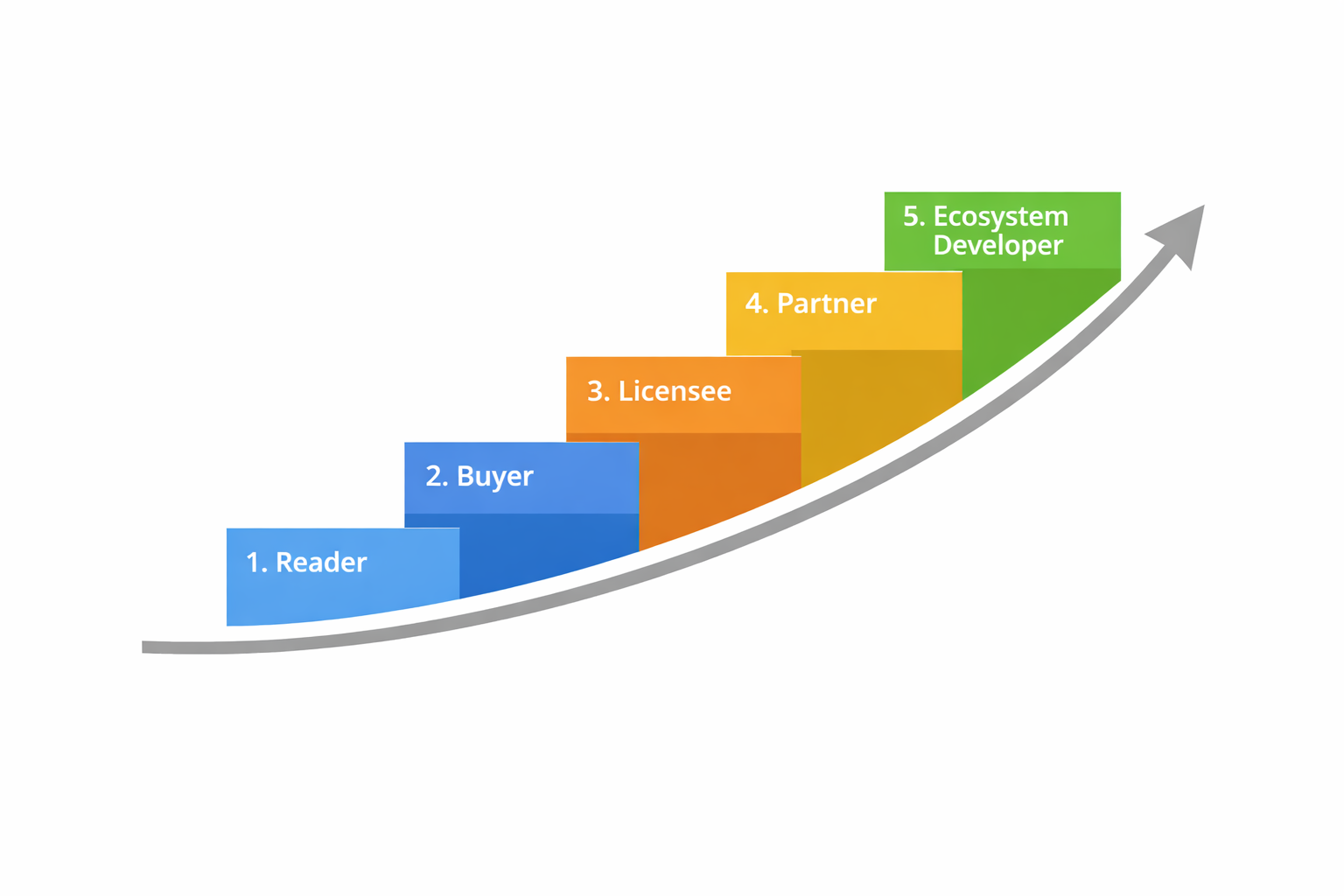
1️⃣ The License Ladder (overview)
Power Book → Power Case → Licensee → Partner → Ecosystem Builder
Each step:
- increases rights, not obligations
- requires proof of application
- filters for seriousness automatically
2️⃣ LEVEL 1 — RapidKnowHow Licensee
Right to Use
Who this is for
- Executives
- Consultants
- Educators
- Public servants
- Independent thinkers
What they get
- Right to use RapidKnowHow frameworks internally
- Use HERO, LMP, Decision Governance tools
- Use in:
- own decisions
- internal teams
- internal workshops
What they do NOT get
- ❌ resale
- ❌ rebranding
- ❌ certification rights
Format
- 12-month license
- Renewal by value (no auto-renew)
Price range (guideline)
- €600 – €1,500 / year
Licensee rule
Apply before you teach.
3️⃣ LEVEL 2 — Certified Licensee
Right to Apply with Others
Entry requirement
- Proven application (Power Case or documented use)
Additional rights
- Facilitate RapidKnowHow methods with clients
- Use branded materials
- Deliver:
- workshops
- briefings
- diagnostics
Obligations
- Respect framework integrity
- Attribution required
- Annual refresh (light, value-based)
Format
- 12-month license
- Renewal requires:
- one documented case
- one learning insight
Price range
- €2,500 – €5,000 / year
Certified rule
Teach only what you have applied.
4️⃣ LEVEL 3 — RapidKnowHow Partner
Right to Co-Create
Who qualifies
- High-performing licensees
- Sector or regional experts
Rights
- Adapt frameworks to:
- industries
- countries
- sectors
- Co-brand solutions
- Revenue share on joint products
Responsibilities
- Quality assurance
- Shared learning feedback
- Stewardship mindset
Economics
- Revenue share (not fixed fees)
- Shared upside, shared responsibility
Partner rule
Grow the system without diluting it.
5️⃣ LEVEL 4 — Ecosystem Builder
Right to Build Independent Nodes
Who this is for
- Institutions
- Networks
- Think tanks
- Education hubs
Rights
- Build independent RapidKnowHow-aligned platforms
- Train others under agreed standards
- Create local ecosystems
Conditions
- Open standards
- Shared learning
- Mutual recognition
- No central control
Economics
- One-time framework license
- Optional contribution to ecosystem fund
Ecosystem rule
No center dominates the system.
6️⃣ Renewal Logic (critical difference)
Renewal is never automatic.
Renewal happens if:
- value was used
- insight was gained
- behavior changed
Simple renewal questions
- Did this improve decisions?
- Did it reduce complexity or stress?
- Did it help others?
If yes → renew
If no → leave with dignity
Exit is part of trust.
7️⃣ Governance & Protection
What RapidKnowHow protects
- Core principles
- Framework integrity
- Brand clarity
What RapidKnowHow does NOT control
- How people think
- What they believe
- Their independence
8️⃣ Why this model works long-term
- Attracts high-quality people
- Filters out opportunists
- Scales through trust & competence
- Creates legacy, not churn
Strong systems don’t retain users.
They attract stewards.
9️⃣ One-sentence positioning
RapidKnowHow licenses thinking systems to people who want responsibility, not dependence.