A Strategic Mindset Shift for 2026 and Beyond
This is not morality.
This is system design for society, business, and leadership.
The term „Gutmensch“ in the Red Ocean environment has become:
- naïve, moralizing
- unstrategic
- reactive
- manipulable
- publicly virtuous but privately ineffective
- trapped in signalling instead of action
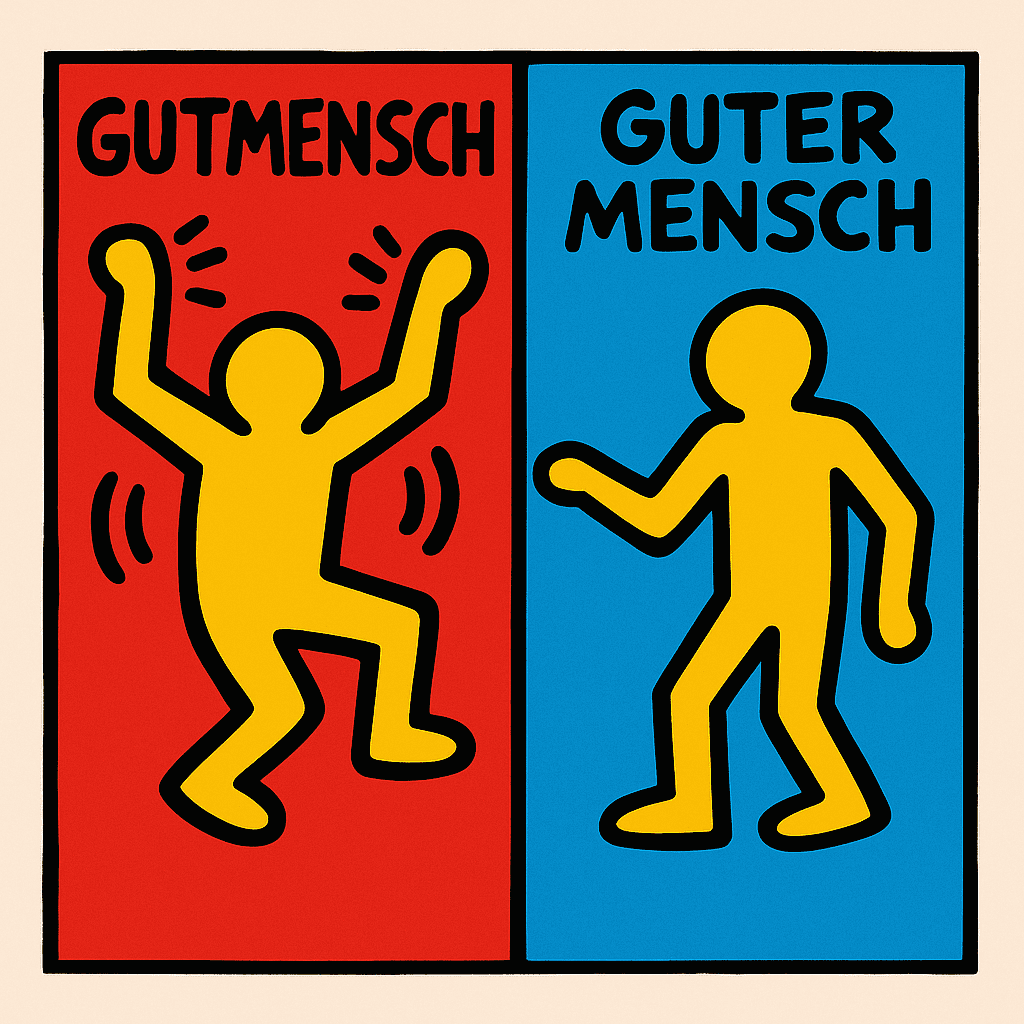
A Red Ocean Gutmensch wants to appear good.
A Blue Ocean Guter Mensch creates good outcomes.
Below is the full RapidKnowHow transformation logic.
🔴 1. Red Ocean Gutmensch – The Trapped Pattern
Mindset
- Wants approval, not impact
- Follows narratives, avoids conflicts
- Believes intentions > outcomes
- Reacts emotionally, not strategically
Behaviour
- Overcommits
- Virtue-signalling
- Cannot say “no”
- Easily exploited
- Lives in reaction mode
System Result
→ Weak boundaries
→ Predictable & manipulable
→ No measurable positive change
This is the weakest form of goodness:
It costs you energy, but it does not improve the world.
🔵 2. Blue Ocean Guter Mensch – The Strategic Human
A Guter Mensch in the Blue Ocean is:
- calm
- clear
- principled
- strategically kind
- operationally strong
- capable of creating measurable positive outcomes
Mindset Shift
From: “I want to be liked.”
To: “I want to deliver value.”
From: emotionally driven
To: early-signal-driven
From: avoid discomfort
To: protect boundaries
Behaviour
- Reads systems, not slogans
- Helps selectively where it produces impact
- Sets limits without guilt
- Responds, does not react
- Turns empathy into effective action
System Result
→ People trust you
→ You become a force multiplier
→ You shape your environment
→ You remove harm instead of enabling it
This is the strongest form of goodness:
It protects, improves, and transforms.
⚔️ 3. The Turning Point: Stop Playing the Red Ocean Game
The Red Ocean rewards:
- noise
- outrage
- symbolic virtue
- drama
- weakness disguised as empathy
But weakness attracts predators.
The Blue Ocean rewards:
- clarity
- strength
- boundaries
- sustainable kindness
- measurable contribution
A Red Ocean Gutmensch is drained.
A Blue Ocean Guter Mensch is empowered —
and empowers others.
🔧 4. RapidKnowHow 5-Step Shift to Become a “Guter Mensch” With Moat
Step 1 — Predict
Identify patterns of manipulation, exploitation, or emotional hijacking.
Act before damage occurs.
Step 2 — Simplify
Cut toxic people, noise, and systems.
Reduce complexity, increase energy.
Step 3 — Reinvent
Replace reactive “helping” with structured, high-impact actions that truly matter.
Step 4 — Ecosystem
Build strong alliances based on mutual respect, not emotional blackmail.
Step 5 — Renew
Regularly update your boundaries, energy management, and habits.
🧭 5. Red Ocean vs Blue Ocean Human Strategy
| Dimension | Red Ocean Gutmensch | Blue Ocean Guter Mensch |
|---|---|---|
| Motivation | approval | impact |
| Behaviour | reactive | strategic |
| Boundaries | absent | strong |
| Energy | drained | protected |
| Role in Society | consumed by noise | creator of order |
| Result | chaos | measurable good |
⭐ 6. Final Power Statement
A Red Ocean Gutmensch is good in intention but weak in effect.
A Blue Ocean Guter Mensch is good in outcome and strong in presence.
The world does not need more Gutmenschen —
it needs Gute Menschen with Moats.
🧠 THE PSYCHOLOGICAL TRANSFORMATION GUIDE
From Red Ocean “Gutmensch” → to Blue Ocean “Guter Mensch”
A Systemic Method to Build Strength, Boundaries, Clarity, and Sustainable Goodness
INTRODUCTION
The “Gutmensch” phenomenon is not about morality — it is about psychology.
A Red Ocean Gutmensch is good-hearted but trapped in patterns that make them:
- exhaustible
- manipulable
- conflict-averse
- guilt-driven
- over-responsible for others
- under-responsible for themselves
They produce intention, but rarely impact.
A Blue Ocean Guter Mensch is someone who:
- sees the system clearly
- protects their boundaries
- acts with strength and clarity
- creates measurable value
- refuses emotional exploitation
- leads by example
They produce impact that sustains itself and others.
This guide shows you exactly how to make the shift.
🔴 PART 1 — Understanding the Red Ocean Gutmensch (Psychology)
The Red Ocean Gutmensch is psychologically defined by:
1. Over-Empathy (Hyper-Empathy)
Feeling responsible for everyone’s emotions.
Taking over burdens that aren’t theirs.
Inability to say “No” without guilt.
2. Conflict Avoidance
Fear that boundaries = rejection.
Fear that honesty = loss of love.
Fear that firmness = aggression.
3. Emotional Hijacking
Others manipulate guilt, pity, or shame.
The Gutmensch reacts rather than chooses.
4. Identity Built on Being Needed
Self-worth is tied to “helping”.
If they do not help, they feel worthless.
5. Lack of Systems Thinking
They solve symptoms, never the underlying structure.
They help individuals while enabling dysfunctional systems.
6. Moralistic Self-Sacrifice
“I must be the good one.”
“I must do more.”
“I must carry the weight.”
Psychological Result:
Good intentions, weak boundaries, predictable burnout.
🔵 PART 2 — Understanding the Blue Ocean Guter Mensch (Psychology)
The Blue Ocean Guter Mensch has:
1. Strategic Empathy
Empathy + clarity + boundaries.
They feel with others,
but they do not drown with them.
2. Boundary Strength
They say “No” correctly and calmly.
They refuse manipulative narratives.
They protect energy like an asset.
3. Responsibility Calibration
They carry what is theirs —
not what is everyone’s.
They refuse to “fix” other adults.
4. High Self-Worth Independence
Their value does not depend on being needed.
They do not require approval to act.
5. Systems Thinking
They solve structural problems,
not emotional noise.
6. Controlled Presence
When they enter a room,
the temperature drops by 10 degrees.
They carry clarity, not chaos.
Psychological Result:
They are kind — but unmanipulable.
Helpful — but not self-destructive.
Present — but not absorbing others’ storms.
⚖️ PART 3 — The Core Difference in One Line
A Gutmensch tries to save everyone.
A Guter Mensch builds systems that don’t need saving.
🧬 PART 4 — The 7 Psychological Shifts (RapidKnowHow Model)
This is the core transformation.
Each shift is a deep rewiring of:
- cognition
- emotion
- behavior
- boundaries
- identity
Shift 1 — From Emotional Reactivity → to Strategic Awareness
Red Ocean Gutmensch:
“I must respond emotionally.”
Blue Ocean Guter Mensch:
“I observe, assess, then act.”
Practice:
Pause 3 seconds before responding.
Ask: “What is the system dynamic here?”
Shift 2 — From Approval Seeking → to Respect Seeking
Red:
“I want them to like me.”
Blue:
“I want them to respect my clarity.”
Practice:
Replace: “I hope they like this.”
With: “Does this align with my principles?”
Shift 3 — From Guilt → to Healthy Responsibility
Red:
“I must fix this.”
“I must help.”
“I must carry their load.”
Blue:
“What is mine to carry? What is theirs?”
Practice:
Daily list: What I am responsible for.
Everything else → “Release.”
Shift 4 — From Over-Empathy → to Balanced Empathy
Red:
Feels with people until emotional flooding occurs.
Blue:
Feels for people but stays grounded.
Practice:
Visualize: “This feeling is theirs, not mine.”
Shift 5 — From Boundary Fear → to Boundary Strength
Red:
“Boundary = conflict.”
Blue:
“Boundary = truth.”
Practice:
Say a kind, firm no:
“Not possible for me.”
“No explanation.”
Shift 6 — From Self-Sacrifice → to Self-Leadership
Red:
Sacrifices themselves for short-term harmony.
Blue:
Invests in themselves to create long-term good.
Practice:
Minimum 60 minutes/day for:
- physical health
- learning
- silence
- creativity
Shift 7 — From Signalling Goodness → to Producing Measurable Good
Red:
Appears good.
Talks good.
Signals good.
Blue:
Builds measurable value:
- healthier relationships
- sustainable outcomes
- clarity in chaos
- predictable reliability
Practice:
Weekly:
“What measurable good did I create?”
🧱 PART 5 — The New Identity: The Blue Ocean Guter Mensch
The Red Ocean Gutmensch says:
“I hope they see I’m good.”
The Blue Ocean Guter Mensch says:
“My value is visible through outcomes.”
Identity rewrite:
- I am not here to save, but to strengthen.
- I am not here to please, but to be authentic.
- I am not here to absorb chaos, but to create clarity.
- I am not here to exhaust myself, but to sustain myself.
- I am not here to be used, but to be respected.
🔥 PART 6 — The 30-Day Transformation (Daily Protocol)
Here is the RapidKnowHow Operational Transformation Protocol:
WEEK 1 — Awareness & Boundaries
- Observe patterns without reacting
- Identify manipulation signals
- Practice firm, short boundaries
- Remove one energy-leak person
WEEK 2 — Responsibility Reset
- Shift responsibility back to others
- Stop rescuing adults
- Say one “clean no” daily
- Practice emotion-labeling (not absorbing)
WEEK 3 — Identity Reinforcement
- Write your new identity script
- Remove self-sacrifice narrative
- Create replacement behaviors
- Practice controlled presence
WEEK 4 — Structural Reinvention
- Redesign one key system in your life:
- relationship
- family role
- work pattern
- digital boundaries
- friendship structure
- Build a simple personal Blue Ocean Moat:
- clarity
- predictability
- reliability
- respect
- time control
🛡️ PART 7 — The Blue Ocean Moat for Your Life
Apply the same logic as business moats:
Predict
Recognize early warning signals (emotional or behavioral).
Simplify
Cut complexity, noise, guilt triggers.
Reinvent
Replace weak patterns with strong ones.
Ecosystem
Build alliances with strong, reliable people.
Renew
Update your personal operating model every 90 days.
📝 PART 8 — Self-Assessment: Are You a Red Ocean or Blue Ocean Mensch?
Score 1–5 for each:
- Do you regularly feel guilty saying no?
- Do others regularly dump emotional or practical burdens onto you?
- Do you avoid necessary conflicts?
- Do you help even when it hurts you?
- Do people respect your boundaries?
- Do you feel you must earn love through helping?
- Do people rely on your clarity or your compliance?
0–15 → Red Ocean Gutmensch
16–25 → Transitional
26–35 → Blue Ocean Guter Mensch
36–40 → Moat Mensch (rare)
🌟 PART 9 — FINAL TRANSFORMATION STATEMENT
A Red Ocean Gutmensch tries to be good.
A Blue Ocean Guter Mensch does good — sustainably, clearly, and with strength.
The world does not need more self-sacrifice.
It needs people who create clarity, boundaries, stability, and measurable value. – Josef David