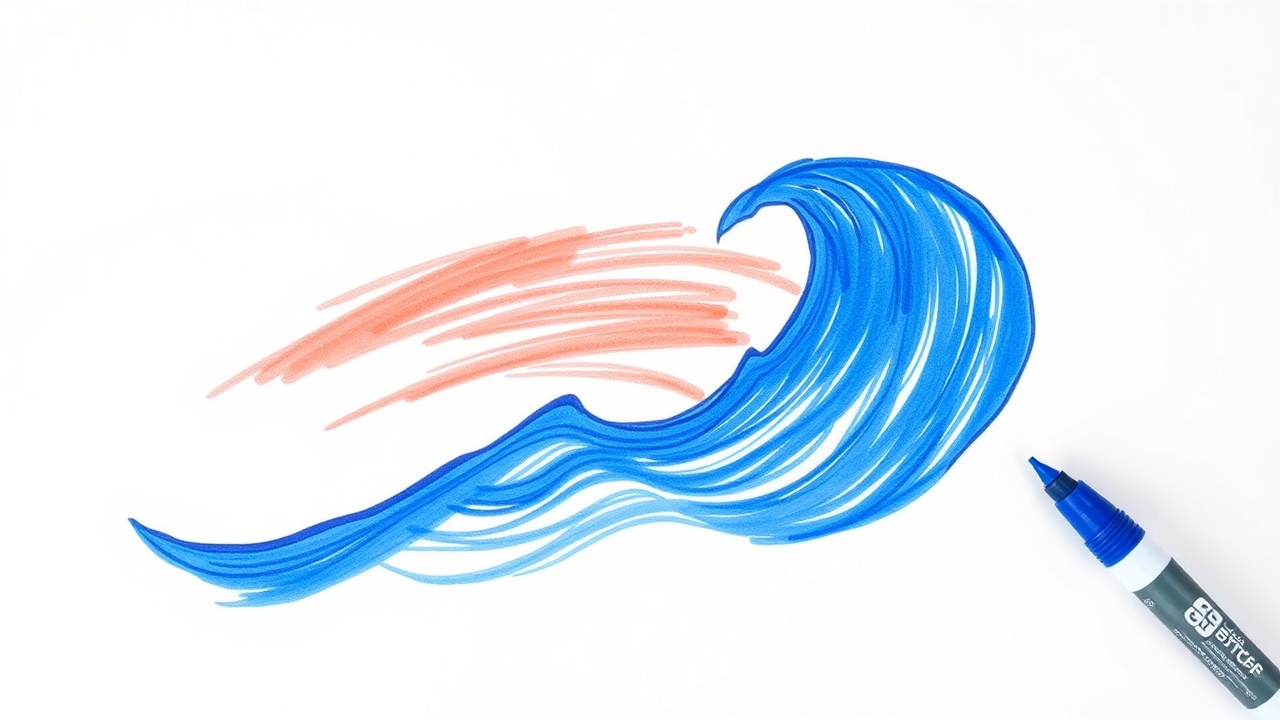
Two Mindsets. Two Systems. Two Completely Different Outcomes.
This framework is built in the RapidKnowHow style:
simple → sharp → strategic → ready for Health Leaders .
🟥 RED OCEAN DOCTOR (2026)
A highly trained professional trapped in a broken system.
The Red Ocean Doctor is not ineffective —
the system forces inefficiency.
Here are the defining characteristics:
1. Reactive Healer
- Treats patients late
- Works under permanent overload
- Little time per patient
- Manages symptoms, not causes
Outcome:
High stress, low impact.
2. Paperwork-Driven Workflow
- 30–50% of time documenting
- Repeating diagnostics
- Navigating insurance rules
- Fighting administration instead of treating patients
Outcome:
The doctor becomes a bureaucratic interface.
3. No Predictive Support
- Decisions rely on memory + experience
- No early warning system
- Hard to compare patients’ histories
- No real-time analytics
Outcome:
Risk of errors ↑, quality ↓.
4. Hospital-Centric Model
- Everything funnels into hospitals
- Overload becomes chronic
- Complexity increases every year
Outcome:
Doctor burnout becomes structural.
5. Leadership Vacuum
- No KPIs for outcomes
- No weekly improvement cycles
- No incentive to innovate
Outcome:
A doctor who tries but cannot transform.
🟦 BLUE OCEAN DOCTOR (2026)
A high-impact health creator supported by a predictive system.
The Blue Ocean Doctor is not “better” —
they work inside a system that makes excellence easy.
1. Predictive Healer
- AI-driven early detection
- Patients come before crises
- 80% of cases handled before complication occurs
Outcome:
Doctor sees health, not only disease.
2. Digital-First Workflow
- Automated documentation
- Structured notes
- No repeated diagnostics
- Seamless patient records
Outcome:
Doctor gains back hours per day.
3. Full Health Data Spine
- All patient data on one view
- Predictive alerts
- Risk categories
- Evidence-based decision suggestions
Outcome:
Clarity replaces uncertainty.
4. Distributed Care Model
- Digital triage
- Nurse-led clinics
- Home monitoring
- Hospital only when necessary
Outcome:
Hospitals stabilize, doctor workload drops 30%.
5. ROICE Leadership
- Weekly dashboards for
- time-to-care
- cost-per-outcome
- convenience score
- outcome improvement
- Incentives for real results
Outcome:
Doctor becomes a health manager — not a burnout survivor.
⚖️ EXECUTIVE COMPARISON: RED vs BLUE DOCTOR 2026
| Dimension | Red Ocean Doctor | Blue Ocean Doctor |
|---|---|---|
| Workflow | Paperwork-heavy | Digital, automated |
| Diagnostics | Late-stage | Predictive, early |
| Patient Pathway | Hospital-centric | Distributed care |
| Data | Fragmented | Unified, actionable |
| Stress Level | Chronic burnout | Sustainable workload |
| Time per Patient | Too short | Optimized |
| Error Risk | Higher | Lower |
| Value Created | Treats illness | Produces health |
| ROICE | Low | High |
🎯 POWER STATEMENT
The Red Ocean Doctor fights a system.
The Blue Ocean Doctor is empowered by one.The future of medicine is not more doctors —
but better systems that multiply their impact.
🩺 Simulation Game
Doctor 2026 — 10 Decisions That Shape the Future
Red Ocean vs Blue Ocean Health Leadership
You are a Doctor in 2026.
In each situation you choose:
- 🟥 Red Ocean Move – reactive, paperwork-driven, symptom-focused
- 🟦 Blue Ocean Move – preventive, data-driven, system-focused
Each decision has a ROICE Score (0–99) for:
Time · Cost · Convenience · Clarity · Results
You can simply read & choose mentally or turn this into a workshop game.
🩻 SCENARIO 1 – The Waiting Room Overflow
Situation:
Your clinic is fully booked. Waiting time: 2+ hours. Patients are frustrated.
- 🟥 Red Ocean Move
Keep the current scheduling. See everyone briefly. Apologise, stress the “system overload”.
Impact: Stress ↑, quality ↓, burnout ↑.
ROICE Score: 18/99 - 🟦 Blue Ocean Move
Introduce digital pre-triage (online symptom check + priority scoring). Convert follow-ups to teleconsults where safe.
Impact: Waiting time halves, complexity per visit drops.
ROICE Score: 88/99
💊 SCENARIO 2 – The Chronic Patient
Situation:
A 62-year-old with diabetes, hypertension, obesity and low adherence.
- 🟥 Red Ocean Move
Adjust medication, repeat standard advice, schedule new visit in 3–6 months.
Impact: Disease continues, risk of complications stays high.
ROICE Score: 22/99 - 🟦 Blue Ocean Move
Create a personal prevention plan: digital reminders, lifestyle coaching, regular remote monitoring, clear measurable targets.
Impact: Risk curve bends down; patient becomes co-owner of health.
ROICE Score: 90/99
📑 SCENARIO 3 – Documentation vs Patients
Situation:
You spend 2–3 hours daily on manual documentation.
- 🟥 Red Ocean Move
Accept paperwork as fate. Stay longer, reduce time per patient to keep up.
Impact: Exhaustion, errors, declining empathy.
ROICE Score: 15/99 - 🟦 Blue Ocean Move
Push for speech-to-text + structured templates and delegate routine entries to trained assistants. You only validate and finalize.
Impact: You regain 1–2 hours/day for clinical thinking and prevention.
ROICE Score: 92/99
🧠 SCENARIO 4 – AI Decision Support
Situation:
Your hospital offers an AI diagnostic and risk tool.
- 🟥 Red Ocean Move
Ignore the tool out of habit or fear. Rely only on gut + experience.
Impact: Missed patterns, inconsistent quality, higher risk.
ROICE Score: 25/99 - 🟦 Blue Ocean Move
Use AI as a second reader: you remain final decision maker, but you systematically check AI suggestions and learn from patterns.
Impact: Fewer errors, earlier detection, better learning curve.
ROICE Score: 91/99
🏥 SCENARIO 5 – Hospital Overload
Situation:
Your ward is constantly over capacity. Beds are full, staff exhausted.
- 🟥 Red Ocean Move
Work harder, extend overtime, ask for more beds, repeat yearly.
Impact: Structural overload becomes permanent.
ROICE Score: 12/99 - 🟦 Blue Ocean Move
Design a step-down pathway:- early discharge with telemonitoring
- home care coordination
- clear re-admission rules
and lobby management with data.
Impact: Shorter stays, more capacity, better outcomes.
ROICE Score: 89/99
📱 SCENARIO 6 – Telemedicine
Situation:
Many stable patients just need follow-up and medication checks.
- 🟥 Red Ocean Move
Require physical visits for almost everything “for safety” or tradition.
Impact: Crowded schedules, wasted patient time.
ROICE Score: 20/99 - 🟦 Blue Ocean Move
Shift all suitable follow-ups to video/phone with structured checklists.
Impact: Time savings for both sides, better access for those who really need in-person exams.
ROICE Score: 87/99
💉 SCENARIO 7 – Polypharmacy Dilemma
Situation:
An 80-year-old takes 10+ medications from different specialists.
- 🟥 Red Ocean Move
Add another drug for a new symptom. Don’t question others’ prescriptions.
Impact: Interaction risk ↑, adherence ↓, overall risk ↑.
ROICE Score: 18/99 - 🟦 Blue Ocean Move
Conduct a medication review: deprescribe where possible, coordinate with other doctors, include patient preferences.
Impact: Fewer side effects, more clarity, lower cost.
ROICE Score: 93/99
😔 SCENARIO 8 – Mental Health Signals
Situation:
You see clear signs of depression / burnout in a patient coming “for back pain”.
- 🟥 Red Ocean Move
Focus strictly on physical symptoms. Prescribe painkillers, skip the conversation.
Impact: Root problem continues, risk of crisis increases.
ROICE Score: 22/99 - 🟦 Blue Ocean Move
Ask 2–3 targeted questions, screen for depression, offer simple next steps: counseling, digital support, follow-up.
Impact: Early intervention, lower long-term risk.
ROICE Score: 88/99
🧓 SCENARIO 9 – End-of-Life Care
Situation:
A terminal patient with repeated hospitalizations and no clear plan.
- 🟥 Red Ocean Move
Continue maximum hospital treatment by default. No structured conversation.
Impact: High cost, high suffering, little added quality of life.
ROICE Score: 15/99 - 🟦 Blue Ocean Move
Initiate an honest, compassionate goals-of-care conversation. Involve family, consider palliative and home options.
Impact: More dignity, less suffering, often less cost.
ROICE Score: 90/99
🧩 SCENARIO 10 – System Innovation
Situation:
You see daily inefficiencies. Leadership asks for “ideas”.
- 🟥 Red Ocean Move
Stay quiet. “Nothing will change anyway.” Focus only on your practice.
Impact: System remains broken; frustration grows.
ROICE Score: 10/99 - 🟦 Blue Ocean Move
Identify one specific process (e.g., discharge planning, lab ordering, triage), propose a simple measurable improvement, and test it for 30–60 days.
Impact: Small pilot, visible result, leverage for larger change.
ROICE Score: 95/99
🧮 SCORING YOUR DOCTOR 2026 PROFILE
For each scenario, note your choice and associated ROICE score.
Add them up.
- 800–990 points – BLUE OCEAN DOCTOR
You practice medicine as health management, using systems, data, and prevention. - 500–799 points – TRANSITIONAL DOCTOR
You see the future and partly act on it, but are still trapped in Red Ocean structures. - < 500 points – RED OCEAN DOCTOR
You fight symptoms in a broken system with too little structural change.
🎯 EXECUTIVE INSIGHT
Doctor 2026 is no longer just a healer of individuals.
Doctor 2026 is a designer of health systems.
Red Ocean Doctors survive the day.
Blue Ocean Doctors reshape the decade.