
AI Orchestrator LEADER
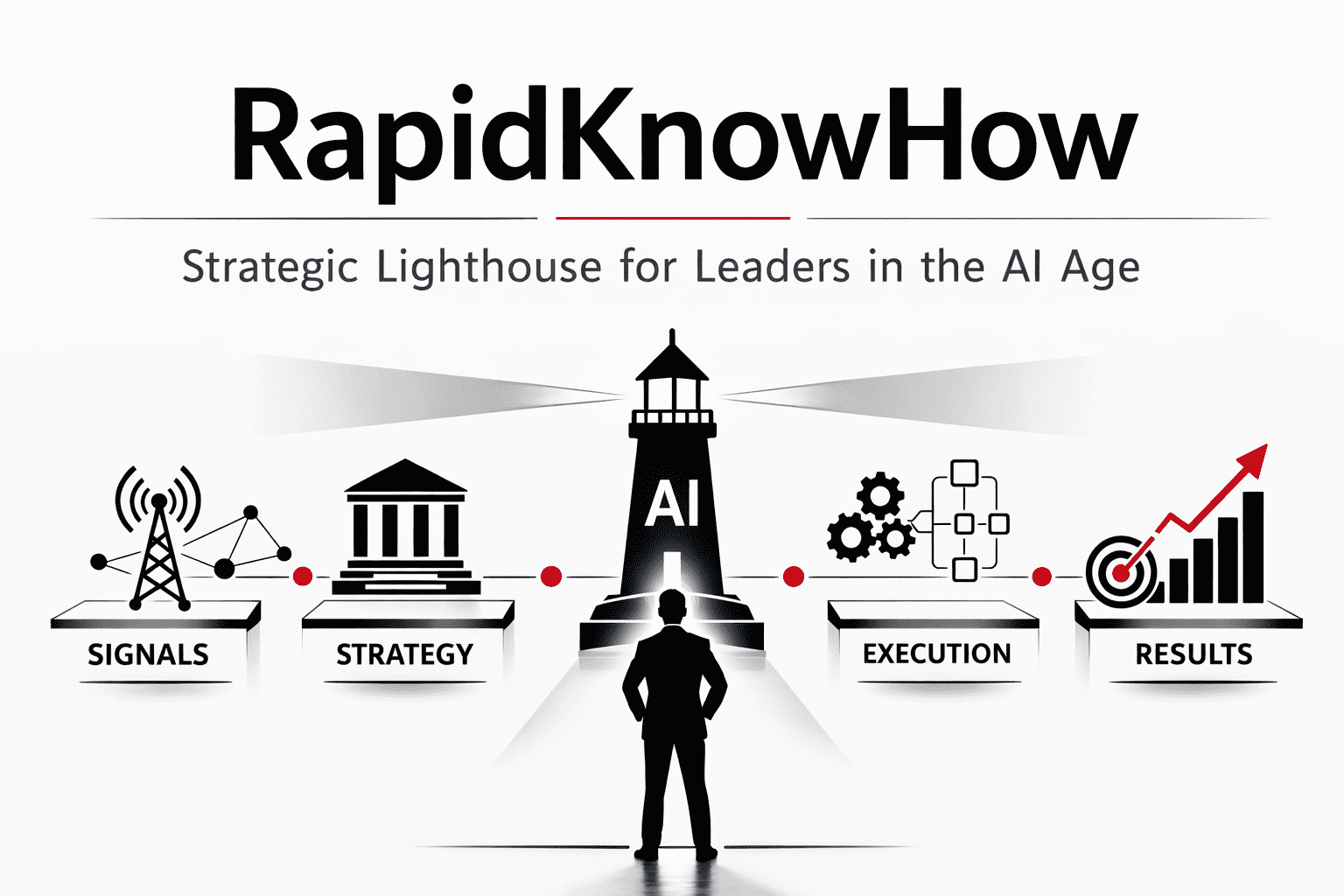
🧭 AI Orchestrator Leader — Executive Definition
An AI Orchestrator Leader designs, sequences, and automates systems across multiple domains (Business, Geopolitics, Wealth, and Life) to convert complexity into clarity, clarity into scenarios, scenarios into action, and action into sustainable strategic advantage — leveraging AI, indirect strategy, and networks.
🏛 The Four Territories of the AI Orchestrator
The AI Orchestrator operates across four strategic territories:
- Business Systems
→ Growth, value creation, B2B ecosystems, BaaS, ROICE - Geopolitical Systems
→ Power dynamics, alliances, scenario forecasting, peacekeeping - Wealth Systems
→ Cashflow engines, asset-light licensing, compounding strategies - Life Systems
→ Health, decision-making, autonomy, personal legacy systems
This is the full scope of orchestration.
🔷 Core Identity of the AI Orchestrator
The AI Orchestrator Leader is:
- not a manager (who controls operations)
- not a consultant (who advises)
- not a strategist (who designs plans)
- not an investor (who allocates capital)
The AI Orchestrator:
Builds & automates ecosystems that produce advantage.
♟️ Foundational Doctrine
The AI Orchestrator uses:
Indirect Strategy
→ win by avoiding strength and exploiting structure
Systems Modeling
→ model dynamics instead of reacting
AI Automation
→ collapse time, cost, and uncertainty
Network Leverage
→ scale through alliances & ecosystems
Licensing
→ scale without asset-heavy expansion
This is why the AI Orchestrator Leader is a meta-role.
🔁 AI Orchestrator Cycle (Universal Loop)
Observe → Model → Orchestrate → Automate → Scale → Reinforce
Each step produces multipliers:
| Step | Multiplier |
|---|---|
| Observe | Insight |
| Model | Clarity |
| Orchestrate | Coherence |
| Automate | Efficiency |
| Scale | Network Effects |
| Reinforce | Compounding |
This loop applies to Business, Geopolitics, Wealth & Life.
🪄 Core Competency Stack
The AI Orchestrator Leader masters 6 competencies:
- Intelligence → signals, data, OSINT, context
- Systems Thinking → feedback loops, dynamics
- Scenario Simulation → futures, contingencies
- Indirect Strategy → avoid direct confrontation
- AI Automation → code, workflows, autonomous processes
- Network Design → alliances, ecosystems, licensing
This forms the Orchestrator Stack.
⚡ Where the AI Orchestrator Replaces Traditional Leadership
Traditional leadership solves:
- linear problems
- with linear tools
- in linear time
But 2026–2032 problems are:
- nonlinear
- multi-domain
- multi-actor
- multi-system
- time-compressed
The AI Orchestrator Leader is the first leadership archetype suited to this environment.
🌍 Why This Matters Now
We are in a transition from:
Industrial Age → Network Age → AI Orchestration Age
Where advantage shifts from:
| Past | Future |
|---|---|
| Force | Information |
| Ownership | Access |
| Hierarchies | Networks |
| Execution | Automation |
| Management | Orchestration |
| Local | Global |
| Input | Outcome |
The leader who cannot orchestrate will be dominated by those who can.
🧩 Sub-Types
Under the umbrella, we now place:
✔ AI Orchestrator — Business Leader
✔ AI Orchestrator — GeoPolitical Leader
✔ AI Orchestrator — Wealth Leader
✔ AI Orchestrator — Life Leader
This is structurally clean and expandable.
🏷 Positioning Statement (Brand Language)
RapidKnowHow defines the AI Orchestrator Leader as the new strategic leadership archetype for the AI-Orchestrated World — mastering systems, simulations, automation, and indirect strategy to build sustainable advantage across business, geopolitics, wealth, and life. – Josef David