The information industry is a vast and diverse sector that encompasses various sub-industries, including publishing, media, telecommunications, and technology. Understanding the competitive landscape of the information industry involves analyzing key players, market dynamics, and factors that influence competition. Here are… Continue Reading →
Was ist X? X, vormals bekannt als Twitter, ist eine neuartige Plattform, die sich auf die Bereitstellung von Echtzeitinformationen und -kommunikation konzentriert. Es hat sich von seiner ursprünglichen Identität als Mikroblogging-Website zu einer umfassenden Plattform für soziale Medien entwickelt, die… Continue Reading →
In the realm of discourse, two terms that often come up are 'facts' and 'opinions'. These two concepts are fundamental to how we understand, interpret, and communicate information. However, there is often confusion about what these terms mean and how they differ.
A fact is a statement that can be proven to be true or false. It is an objective reality that exists independently of our beliefs or feelings. For instance, the statement "Water boils at 100 degrees Celsius at sea level" is a fact because it can be empirically tested and verified. Facts are typically based on empirical evidence and can be confirmed through observation, experience, or scientific method.
On the other hand, an opinion is a subjective belief or viewpoint that is not necessarily based on proof or certainty. It is a personal interpretation or judgment about something, which may vary from person to person. For example, the statement "Chocolate ice cream is the best flavour" is an opinion because it reflects a personal preference that may not be shared by everyone.
Now, why should we provide facts? Facts serve as the bedrock of rational discourse. They provide a common ground for discussion and decision-making. Without facts, our understanding of the world would be based solely on subjective perceptions and beliefs, which could lead to misunderstandings and conflicts. Facts allow us to make informed decisions, solve problems effectively, and build a shared understanding of reality.
However, it's important to note that opinions are not inherently bad or useless. They reflect our personal values, experiences, and perspectives, which are crucial for diversity of thought and cultural richness.
The key is to distinguish between facts and opinions, and use them appropriately in different contexts.
So how can we turn opinions into facts? Here are FIVE KEY STEPS:
1. **Research**: The first step in turning an opinion into a fact is to conduct thorough research. This involves gathering data from reliable sources to support your viewpoint.
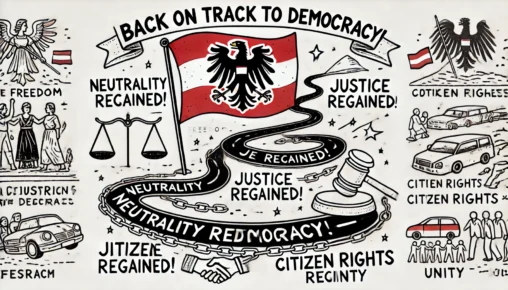
Austria wanted to install Covid CUMPULSORY Vaccination as the first country
2. **Evidence**: After conducting research, you need to present your findings in a clear and concise manner. This includes providing evidence to back up your claims.

3. **Verification**: Once you have presented your evidence, it's important to verify its accuracy. This can be done by cross-checking with other sources or consulting experts in the field.
https://www.parlament.gv.at/gegenstand/XXVII/A/2173


The SPIKE protein in Covid boosters damages, among other things, the inner lining of the vessels (the endothelium).
This results in clots of different sizes. These clots can block larger blood vessels. This is called an embolism. Repairing the damage can take weeks or months. The effect of SPIKE PROTEIN on repair mechanisms in the cell nucleus can lead to rapidly growing tumors and long-lasting autoimmune diseases. Worsst cases lead the DEATH

ANAPHYLAKTISCHER SCHOCK: Ist eine allergische Reaktion des gesamten Immunsystems auf die wiederholte Zufuhr körperfremder Eiweißstoffe, wie SPIKE PROTEINE und betrifft den gesamten Organismus, von leichten Hautreizungen uber Störungen der Organfunktionen bis zum anaphylaktischen Schock, der zum tödlichen Kreislaufversagen führen kann.
5. **Review**: Finally, review your work to ensure that it is free from bias and that it accurately represents the facts.
In conclusion, facts and opinions are both essential components of our discourse. While facts provide a solid foundation for rational discussion and decision-making, opinions enrich our understanding of the world by reflecting our diverse experiences and perspectives. By distinguishing between these two concepts and using them appropriately, we can enhance the quality of our communication and decision-making processes.
In the realm of discourse, two terms that often come up are ‘facts’ and ‘opinions’. These two concepts are fundamental to how we understand, interpret, and communicate information. However, there is often confusion about what these terms mean and how… Continue Reading →
Problem: Die Corona-Pandemie hat die Welt in ihren Bann gezogen und die Suche nach einer effektiven Impfung hat oberste Priorität. Besonders für Risikogruppen, wie ältere und schwer vorerkrankte Menschen, ist eine Impfung von entscheidender Bedeutung. Doch mit der Einführung der… Continue Reading →
Promoting yourself with your own broadcasting channel can be a powerful way to showcase your expertise, build your personal brand, and connect with your target audience. Here are some steps to help you effectively promote yourself through your broadcasting channel:… Continue Reading →
Politiker können soziale Medien nutzen, um Hass und Zwiespalt zu schüren, indem sie bestimmte Taktiken anwenden: 1. Verbreitung von Fehlinformationen: Politiker können bewusst falsche Informationen verbreiten, um Zwietracht zu säen und ihre politische Agenda voranzutreiben. Durch die Nutzung sozialer Medien… Continue Reading →
Die Medienlandschaft ist ständig im Wandel und es ist immer interessant, über mögliche Szenarien nachzudenken, wie sich der Medienmarkt bis 2030 entwickeln könnte. Hier sind drei mögliche Szenarien und eine Bewertung ihrer Wahrscheinlichkeit: 1. **Vollständige Digitalisierung**: In diesem Szenario würden… Continue Reading →
Neid und Hass können aus verschiedenen Gründen entstehen und sind oft das Ergebnis komplexer sozialer, psychologischer und kultureller Faktoren. Hier sind einige mögliche Ursachen: 1. Soziale Ungleichheit: Wenn Menschen das Gefühl haben, dass sie benachteiligt oder ungerecht behandelt werden, kann… Continue Reading →
Kooperative Rhetorik bezieht sich auf den Einsatz von Sprache und Kommunikationstechniken, um eine positive und konstruktive Atmosphäre zu schaffen, in der verschiedene Standpunkte gehört und respektiert werden. Sie zielt darauf ab, gemeinsame Lösungen zu finden und den Dialog zu fördern…. Continue Reading →
© 2026 RapidKnowHow — Powered by WordPress
Theme by Anders Noren — Up ↑
You cannot copy content of this page