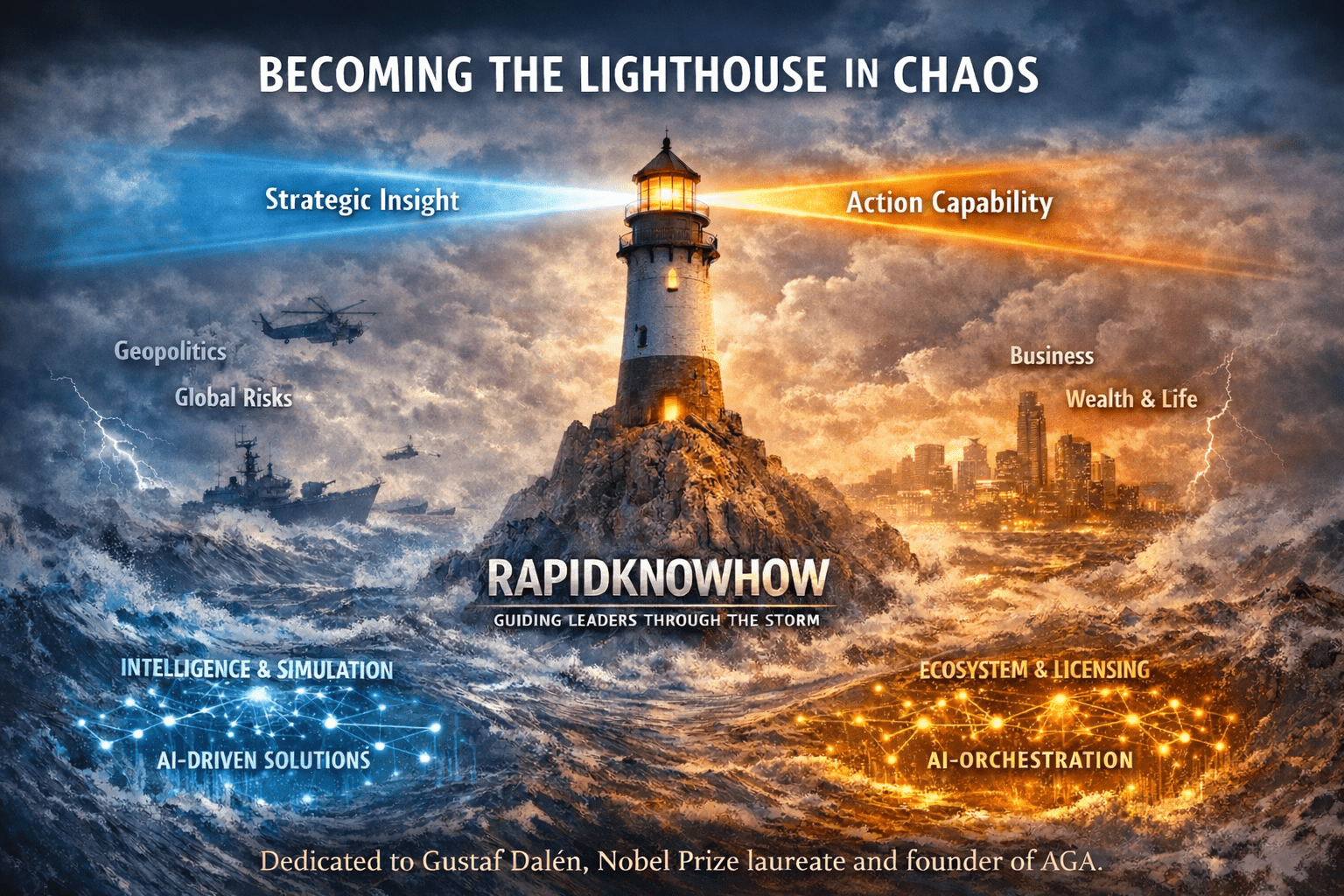

RapidKnowHow + ChatGPT | From Digital Finance to Autonomous Value Systems
1. The Age of Transition (2020 – 2025): From Automation to Digitization
In this first stage, AI entered the world of finance through process automation.
Banks and corporations implemented AI tools for credit scoring, KYC/AML checks, fraud detection, and customer analytics.
Open banking APIs improved transaction speed and transparency.
Yet, most organizations stayed in silos — finance became faster, but not smarter.
Limitation: AI was used to cut costs, not to create value.
Winners: Fintech innovators integrating AI with compliance (e.g., Revolut, Stripe).
Laggards: Traditional finance teams operating on legacy batch systems.
2. The Age of Transformation (2025 – 2028): From Digitization to Ecosystems
Finance evolves into networked ecosystems where banks, corporates, fintechs, and auditors exchange real-time data.
AI moves from automation to intelligence orchestration, managing liquidity, credit, and risk across partners.
This era marks the rise of tokenized assets — programmable digital instruments with built-in policy rules.
Finance becomes transparent, instant, and measurable.
The STVE Formula:
(Human Leadership + AI Leadership) × Licensed Partners = Sustained Value Ecosystem
RapidKnowHow applies this by building AI-Treasury-as-a-Service and PowerLicense Finance Networks that scale across industries.
3. The Age of Intelligence (2028 – 2030): From Ecosystems to Autonomy
By 2030, finance transforms into a self-optimizing system — where cash-flows, risks, and investments adjust automatically within ethical and legal boundaries.
The new financial triad:
- AI Treasurer – manages liquidity and currency exposure in real-time.
- Smart Contracts – execute transactions instantly once conditions are met.
- Continuous Assurance – compliance, audit, and ESG validation run 24 × 7.
Finance no longer reacts — it predicts and prevents.
The new metric of success is ROICE ≥ 90, measuring Return on Innovation, Convenience & Efficiency.
4. The Strategic Levers of AI-Financing
| Lever | Description | 2030 Target | RapidKnowHow Application |
|---|---|---|---|
| AI Risk & Treasury | Autonomous management of liquidity, FX, and hedging | Real-time liquidity optimization | AI-Treasurer Control Tower |
| Tokenization | Smart, policy-embedded financial assets | T+0 settlement where permitted | Policy-Smart Contract Library |
| Compliance-by-Design | Continuous KYC, AML, tax, and ESG checks | Zero manual audits | RegLogic Engine |
| Liquidity Networks | Shared risk and performance signals | Global partner transparency | SignalHub + Partner Scorecards |
| Finance ROICE | Innovation, Convenience, Efficiency combined | ROICE ≥ 90 | ROICE Finance Dashboard |
5. Vision 2030: Autonomous Value Finance
“Finance becomes a living system — instant, transparent, and compliant by default.”
AI Core: Forecasts demand, allocates liquidity, executes transactions.
Human Core: Sets ethics, risk appetite, and long-term purpose.
Partner Core: Banks, fintechs, and oracles collaborate as licensed nodes.
Formula 2030:
TAF = (Human Purpose × AI Intelligence × Policy Automation) ÷ Time
6. The RapidKnowHow 5-Step Action Model
- Define Your Financial Purpose – align liquidity with strategic growth.
- Map Your Ecosystem – include banks, fintechs, auditors, and data oracles.
- License Your Playbooks – turn finance solutions into reusable PowerLicenses.
- Automate Cash-Flows – apply RapidCheckOut + Smart Contract logic.
- Govern Ethically – integrate RegLogic for real-time compliance.
7. Power Statement
“2030 belongs to those who build finance systems that think, decide, and govern themselves — ethically and intelligently.”
8. Brand Signature
RapidKnowHow + ChatGPT | All Rights Reserved | 2030 Series
Title: Total AI-Financing Evolution 2030
Formats: PowerReport · PowerPoster · PowerLicense