
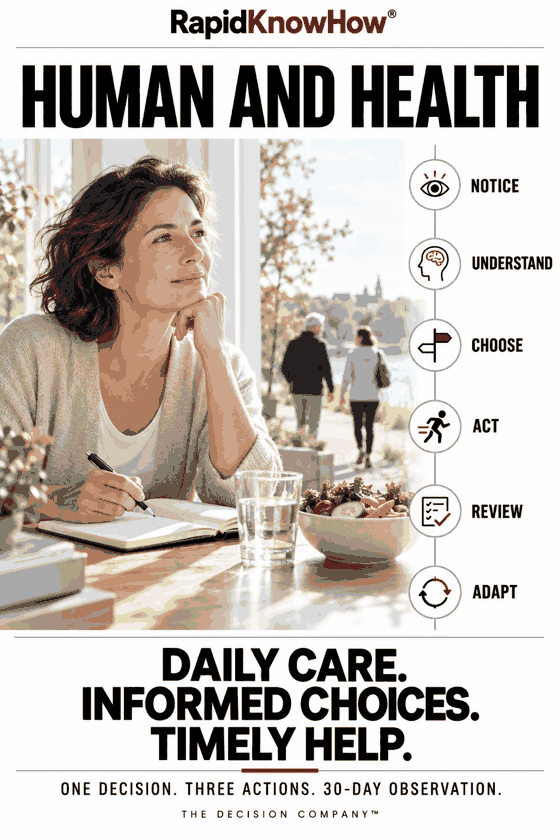
HEALTH GROWS THROUGH DAILY CARE, INFORMED DECISIONS AND TIMELY HELP.
How do we give body and mind time to recover?
Sleep needs differ, and daytime functioning helps reveal whether sleep is adequate. Regular routines and a comfortable sleeping environment may help. Persistent sleep problems require more than judging oneself for an imperfect routine.
THE SIGNAL / PROBLEM
The signal is repeated difficulty sleeping or daytime sleepiness affecting normal tasks. Loud snoring with gasping or choking is a reason to seek assessment.
THE SYSTEM
Record sleep timing and daytime effects for a short period. Choose one routine change, such as a consistent waking time or a calmer evening. Keep the record simple enough to avoid turning sleep into another performance pressure.
ONE DECISION
Create one repeatable opportunity for rest.
TOP 3 ACTIONS
- Note sleep timing and daytime alertness for a week.
- Choose one manageable routine or environment adjustment.
- Review its usefulness and seek care if problems persist or affect daily life.
30-DAY OBSERVATION
A sleep-routine record and a decision to retain, change or discuss the approach.
ILLUSTRATIVE CASE
A reader moves demanding news browsing away from bedtime and prepares a quieter evening. They report how they feel rather than claiming that a tracker has proved restorative sleep.
CARE CHECK
Do not drive when sleepy. Persistent fatigue, insomnia or suspected sleep apnoea warrants professional assessment.
ACTION CHECKLIST
Choose one relevant need → record observations → choose a suitable action or care contact → act → review → adapt. Seek care sooner whenever symptoms or your care plan require it.
NHS: sleep problems; tiredness and fatigue. Sources checked 7 October 2026. The decision framework and cases are RapidKnowHow editorial work, not clinical protocols.
← Previous episode · Start the series · Next episode →
Apply the complete system
For organisational health-literacy education, explore PowerLicense →. Scope, rights and fees are separate. Licensing does not authorize diagnosis or treatment.
General education for adults. Not a diagnosis, treatment plan or individualized exercise or diet prescription. Cases are illustrative; no medical outcome is promised.
RapidKnowHow® — THE DECISION COMPANY™